The angle and contour of the nasal tip play a crucial role in balancing and beautifying the face. A drooping or ptotic nasal tip can visually age the face, making one look sad or tired, and disrupting overall facial harmony. Many people assume that correcting this issue requires a complex, full nose job (Rhinoplasty). The good news is that a focused, minimally invasive procedure with a shorter recovery time, known as Tip Plasty (or Tip Rhinoplasty), is specifically designed to address nasal tip concerns, including ptosis. This comprehensive guide will delve into Nasal Tip Ptosis Correction, examine the causes of this common aesthetic concern, and explain how Tip Plasty serves as an effective and permanent solution for a droopy nasal tip.
Why Does Nasal Tip Ptosis Occur?
Nasal Tip Ptosis, the medical term for a drooping tip, can happen for several reasons. Understanding the underlying cause is the first step toward choosing the best treatment. Contrary to popular belief, this issue is not always related to aging and can be seen in younger individuals.
1. Structural and Genetic Factors
The most common cause is the nose’s inherited cartilaginous structure. In these cases, the septal cartilage (the wall dividing the nostrils) may be excessively long and project downward, pulling the tip with it. Furthermore, weakness in the Lower Lateral Cartilages, which are responsible for supporting the nasal tip, can prevent the tip from maintaining its ideal projection. This genetic factor explains why some individuals face this challenge from a young age and seek Droopy Tip Nose Surgery.
2. The Natural Aging Process
As we age, supporting tissues throughout the body, including the face and nose, weaken. The ligaments and connective tissues holding the nasal tip cartilages in place gradually stretch and become lax. This process, combined with the continuous effect of gravity, causes the tip to slowly droop downward. In these instances, Nasal Tip Ptosis Correction can significantly help restore a more youthful and alert appearance.
3. Previous Unsuccessful Rhinoplasty
One of the more concerning causes of a droopy tip is the result of a prior nose surgery. If the original surgeon removed too much of the septal or tip cartilage, the tip’s supporting structure becomes compromised. Over time, as scar tissue forms, the nasal tip may gradually drop. These individuals usually require a Revision Rhinoplasty Surgeon specializing in Tip Ptosis Correction.
Who is the Right Candidate for Tip Plasty?
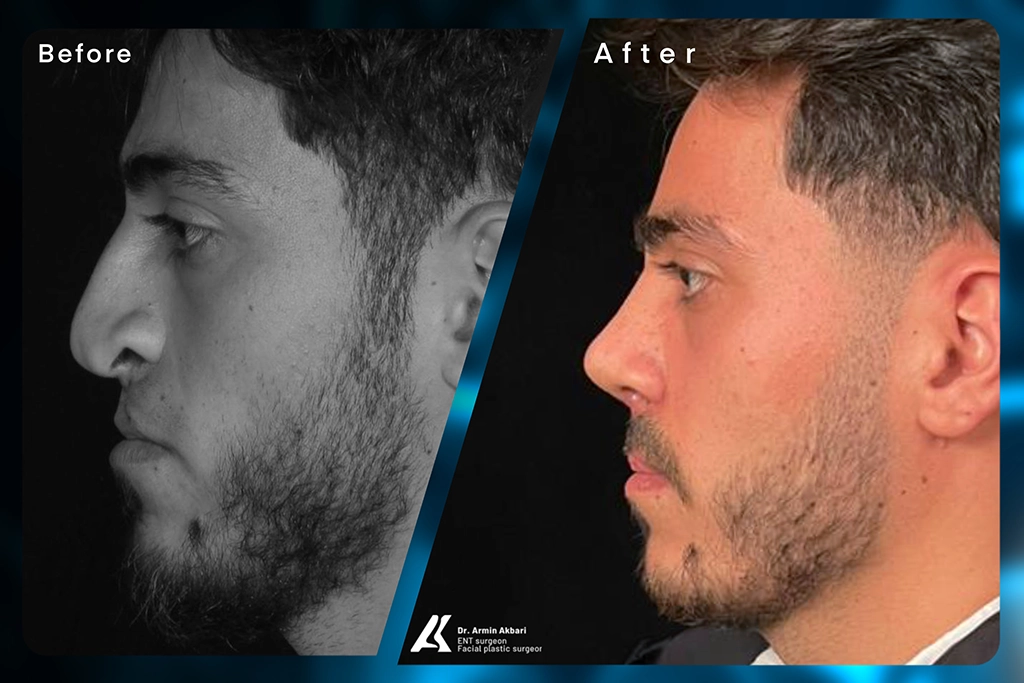
Tip Plasty is not suitable for everyone seeking nasal improvement. As a specialized and minimally invasive nose job, it is designed for a specific group of candidates. You are likely an ideal candidate for this procedure if:
- Your Main Concern is Exclusively the Nasal Tip: If you are happy with your nasal bridge and dorsal profile but are only concerned with the tip being droopy, bulbous, wide, or asymmetrical, Tip Plasty is an ideal option.
- You Prefer a Less Invasive Surgery: If you wish to avoid the extensive downtime, severe bruising, and swelling associated with a full rhinoplasty, Tip Plasty offers a faster recovery.
- You Are in Good General Health: Like any surgical procedure, good overall health and cessation of smoking are prerequisites.
- You Have Realistic Expectations: It is crucial to understand that this procedure will only affect the lower third of your nose and is not designed to overhaul the entire nasal structure.
Tip Plasty vs. Full Rhinoplasty: Key Differences
Many patients confuse these two procedures. Understanding the distinctions is essential for making an informed decision.
| Feature | Rhinoplasty (Full Nose Job) | Tip Plasty (Nasal Tip Plasty) |
| Scope of Work | Entire nasal structure (bone, bridge, septum, tip, and nostrils). | Exclusively the nasal tip (lower cartilages). |
| Primary Goal | Complete reshaping, hump removal, deviation correction, and breathing improvement. | Refining tip shape, lifting, narrowing, and achieving better definition. |
| Invasiveness | Highly invasive, often requiring the breaking/shaping of nasal bones (osteotomies). | Minimally invasive; no changes are made to the nasal bone structure. |
| Anesthesia | Usually, General Anesthesia. | Usually Local Anesthesia with Sedation. |
| Recovery Time | Longer (several weeks) with significant swelling and bruising. | Shorter (a few days to one week); much less swelling and bruising. |
| Cost | Higher cost. | Tip Plasty Cost is significantly lower than full Rhinoplasty. |
If your only concern is a droopy tip, opting for a full rhinoplasty is like remodeling the entire house when only the front door needs repair. Tip Plasty is the precise, cost-effective solution for Nasal Tip Ptosis Correction.
The Tip Plasty Procedure: Correcting a Droopy Tip

Nasal Tip Ptosis Correction via Tip Plasty is an artistic and meticulous process that typically takes between 1 to 2 hours and is performed as an outpatient procedure.
Anesthesia and Incisions
The surgery is usually performed under local anesthesia with intravenous sedation. The surgeon accesses the tip cartilages using one of two techniques:
- Closed Technique: All incisions are made inside the nostrils, leaving no visible external scarring.
- Open Technique: A tiny incision is made across the columella (the strip of skin between the nostrils). This provides the surgeon with superior visibility and access for more complex tip refinements.
Cartilage Refinement and Support
This is the most critical stage of Droopy Tip Nose Surgery. The surgeon uses various techniques to modify and reinforce the tip structure:
- Suturing Techniques: Permanent sutures are used to tighten the lower lateral cartilages and rotate them upward to create the desired Nasal Tip Lift.
- Cartilage Resection: A small amount of cartilage may be removed to narrow a bulbous or wide tip.
- Cartilage Grafting (Key for Lift): To strengthen the structure and provide greater support, the surgeon often uses small pieces of the patient’s own cartilage (harvested from the septum or ear) as a supporting column or strengthening graft. This is vital for preventing post-operative tip drooping.
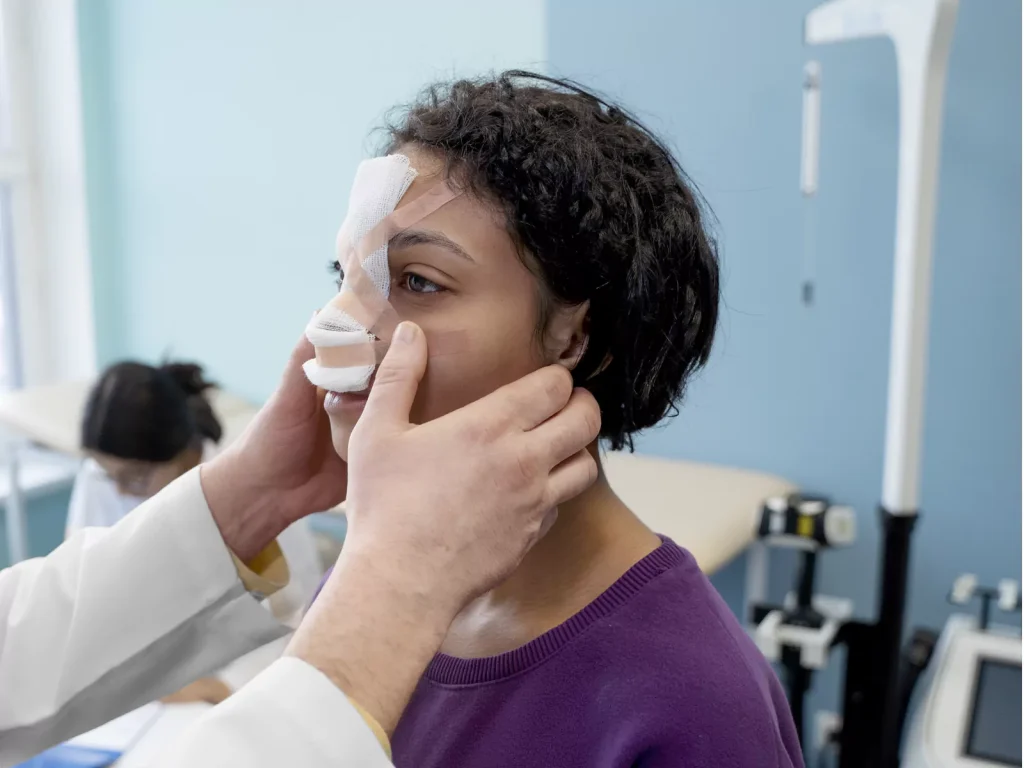
The incisions are then closed with fine sutures, and the nose is dressed with special tape and a splint to protect the new structure during the initial healing days.
How Permanent is Tip Plasty?
The longevity of Tip Plasty results is one of its major advantages. Since the procedure permanently modifies and reinforces the cartilaginous structure of the nose, the results are considered lifelong. Unlike temporary solutions like fillers, Tip Plasty provides a definitive and stable Nasal Tip Ptosis Treatment.
While the natural aging process will continue, the structural changes made to the nose will remain. The nose will never return to its original ptotic state.
How to Prevent the Nasal Tip from Drooping After Surgery?
Successful surgery relies equally on the surgeon’s skill and the patient’s adherence to post-operative care. Preventing post-operative tip drooping is a major concern, and minimizing this risk requires adherence to these guidelines:
- Choose a Specialized Surgeon: The most important step is selecting a surgeon with deep expertise in modern tip reinforcement techniques. A skilled surgeon will strengthen the supporting structures to resist gravity and scar tissue contraction.
- Strictly Follow Post-Op Instructions: Meticulously follow all advice regarding medication, cleaning, and follow-up visits.
- Protect the Nose from Impact: Avoid heavy exercise, contact sports, and any situation where the nose could be hit for several months.
- Proper Sleeping Position: Sleep on your back with your head elevated on several pillows for the first few weeks to reduce swelling and prevent unintended pressure on the nose.
- Avoid Heavy Glasses: Do not place heavy prescription or sunglasses directly on the bridge of the nose for at least 4 to 6 weeks. The pressure can negatively impact the healing structures.
- Patience is Key: Tip swelling is the last to resolve, and it can take 6 months to a year for the final, refined result to fully manifest. Be patient and trust the healing process.
Cost of Tip Plasty in Iran (Nasal Tip Correction Fee)
The Tip Plasty Cost is not a fixed figure and depends on several variables. The first and most important point is that the cost of Tip Plasty is always lower than the cost of a comprehensive Rhinoplasty.
The primary factors determining the final cost include:
- Surgeon’s Fee: This is the largest component and is determined by the surgeon’s experience, reputation, and the complexity of the tip work (e.g., need for cartilage grafts).
- Facility Fee: This covers the use of the operating room, equipment, and nursing staff.
- Anesthesia Fee: Since Tip Plasty often uses local anesthesia with sedation, this cost component is generally lower than the general anesthesia required for full rhinoplasty.
- Geographical Location: Costs are typically higher in major cities due to elevated overhead expenses.
- Ancillary Costs: These include pre-operative lab tests, prescribed medications, ointments, and post-operative follow-up visits.
Final Note on Cost: Never compromise quality for a lower price. Choosing an inexperienced surgeon increases the risk of needing revision surgery, which is far more costly and emotionally taxing in the long run.
Conclusion: A Precise Solution for Facial Balance
A droopy nasal tip can significantly affect facial aesthetics and harmony. As discussed, this condition has various causes, ranging from genetics to natural aging. Fortunately, for individuals whose concern is limited to the tip, a full, invasive rhinoplasty is unnecessary.
Nasal Tip Ptosis Correction via Tip Plasty is a refined, focused, and highly effective surgical approach. It offers permanent, satisfying results with minimal invasion and a much shorter recovery time. By reinforcing the underlying support structures and refining cartilage shape, this procedure effectively lifts the tip, creating a more youthful, alert, and balanced facial appearance.
Choosing a skilled surgeon and diligently adhering to all post-operative instructions are the two fundamental pillars for achieving the best outcome and ensuring the longevity of your Nasal Tip Lift. Ultimately, Tip Plasty is an investment in your confidence and beauty that provides a lasting, positive change.
Frequently Asked Questions (FAQ)
During the procedure, you will feel no pain due to local anesthesia and sedation. Post-surgery, the pain is typically mild to moderate and is often described more as pressure or congestion. It is easily managed with prescribed pain medication and subsides significantly after the first few days.
The recovery time is considerably shorter than that of full rhinoplasty. Most individuals can return to work and light daily activities after 3 to 5 days. The external splint or cast is usually removed after one week. However, you must wait at least 4 to 6 weeks before resuming strenuous activities or any activity that risks impact to the nose.
This depends on the technique used. In the Closed Technique, all incisions are internal, leaving no visible external scars. In the Open Technique, a very small incision is made on the columella. This incision is placed strategically and typically fades over time, becoming virtually imperceptible.
Yes, non-surgical options like dermal fillers can be injected to slightly lift the tip by adding volume to specific points. However, these results are temporary (lasting 6 to 12 months) and are not suitable for all types of ptosis, especially severe cases. Tip Plasty is the only permanent, structural solution for Nasal Tip Ptosis Correction.
For this procedure, the facial and nasal structures must be fully developed. This typically occurs around ages 16–17 for females and 17–18 for males. There is no maximum age limit, provided the individual is in good general health.