Planning rhinoplasty in Iran begins with a question that a price list cannot answer: what would surgery need to change for you, and what should it leave alone? Some people want a smoother bridge or a better supported tip. Others also have trouble breathing. The right plan depends on an examination of your nasal structure, skin, health and goals, not a photograph or a named “nose type” alone.
This guide covers the decisions shared by local and international patients: who may be a suitable candidate, how different approaches are chosen, what results and recovery can realistically look like, and what to arrange before traveling. It is the English counterpart of Dr. Armin Akbari’s Persian guide to rhinoplasty. If you are ready to discuss travel services and an individual quotation, the separate rhinoplasty package in Iran explains those arrangements in detail.
What rhinoplasty can change
Rhinoplasty reshapes parts of the nose’s bone and cartilage, and the skin then settles over the new framework. A plan might address a dorsal hump, a crooked bridge, tip shape, nostril proportions or the relationship between the nose and the rest of the face. The goal is a balanced result that suits the individual; an exact degree of symmetry or a copy of someone else’s nose cannot be promised.
Appearance and breathing also need to be considered together. If you have nasal obstruction, the surgeon should look for its cause rather than assume that cosmetic reshaping will solve it. A deviated septum may be treated with septoplasty during the same operation when clinically appropriate. Other causes of blockage require their own assessment. Tell the team about prior injuries, allergies, previous operations and any change in breathing before you discuss the shape you want.
During an in-person visit, the surgeon can examine the outside and inside of the nose and consider how the proposed change might affect support and airflow. That is also the right time to ask whether an incision, a graft or a functional procedure is expected in your case. The label “nose job” covers very different operations, so an attractive result in someone else’s photograph says little about the exact steps you would need.
Is rhinoplasty right for you?
A useful consultation starts with your reasons for surgery and your expectations. The surgeon will review your medical history, medications, breathing and nasal structure, then discuss what is feasible. Photographs can help frame that conversation; they cannot establish a final surgical plan or guarantee a result before an in-person examination.
You may need more assessment, a delay or a different approach if an illness is uncontrolled, your nose is still developing, your expectations cannot be met safely, or recovery and follow-up cannot be arranged. Do not stop prescribed medicines on the basis of a website checklist. Ask the surgeon and the clinician who prescribed them what changes, if any, are needed before the operation. Smoking and vaping can interfere with healing and should be raised openly at consultation.
Every operation has risks. For rhinoplasty these include bleeding, infection, a reaction to anesthesia, scarring, altered sensation or smell, persistent breathing difficulty, asymmetry and the possibility of further surgery. The probability and relevance of each risk depend on your health and proposed procedure. A good consultation makes room for these questions without suggesting that a complication is inevitable.
Bring a current list of medicines and supplements, and tell the surgeon about any previous reaction to anesthesia. It helps to say plainly what outcome would disappoint you: perhaps an obvious upturned tip, a narrower airway or a long period away from work. Those concerns give the surgeon useful information for a realistic plan. If your priorities conflict, ask what can be addressed safely now and what is better left alone.
Nose types and why the distinction matters
“Bony” and “fleshy” are everyday descriptions used in Iran, not diagnoses that determine one standard technique. Surgeons assess skin thickness, cartilage strength, the bridge, the tip, the airway and what changes a particular nose can support.

Bony or thinner-skinned noses
A thinner skin envelope may show a dorsal hump or irregularities in the underlying framework more clearly. It can also reveal small contour changes after surgery. The plan may involve the bridge, tip or both, with attention to maintaining breathing and a stable structure. Our bony nose rhinoplasty guide explores dorsal humps and thin skin in greater detail.
Thick-skinned or “fleshy” noses
Thicker skin can soften the visible definition of the tip and make swelling slower to settle. The discussion should focus on the strength and support of the framework as well as the skin, rather than promise a tiny, sharply sculpted tip. A wide tip can have several causes, so its treatment cannot be chosen from a selfie. Read the focused fleshy nose rhinoplasty guide for expectations and recovery considerations.
Mixed features
Many noses combine a more defined bridge with thicker skin at the tip. A simple label can hide the detail that matters most: which parts of the structure need changing, which should be preserved and how the skin may heal. The surgeon can explain those tradeoffs after examination.
If retaining familiar facial features is a priority, the Middle Eastern rhinoplasty guide explains how to discuss desired changes alongside the features you want to preserve.
Open, closed and revision rhinoplasty
In an open approach, an incision across the columella, the tissue between the nostrils, is combined with incisions inside the nose. A closed approach uses incisions within the nostrils. Neither is automatically superior. Access, anatomy, prior surgery and the corrections planned help determine the approach. An open incision can leave a small scar; a closed approach avoids that external incision but is not suitable for every case.
The decision also involves more than where the incisions are placed. A hump correction, tip support and airway work may call for different steps even when two patients choose the same approach. Ask the surgeon to explain the changes proposed for your nose, how the framework will be supported and what recovery instructions apply. Marketing names for techniques do not establish which operation is appropriate for you.
Revision rhinoplasty addresses a problem after an earlier operation, such as a new breathing concern, structural change or an outcome that needs reassessment. Scar tissue, altered anatomy and limited available cartilage can complicate planning. Swelling also changes appearance for many months, so an early concern does not always mean another operation is needed. If this is your situation, use the dedicated revision rhinoplasty in Iran page to prepare a case-specific discussion.
What counts as a realistic result?
Patients often use words such as “natural,” “refined” or “more defined,” but those words can mean different things to different people. Bring examples of features you like and explain what troubles you about your own nose. Then ask which changes are compatible with your anatomy and breathing. A straight bridge or narrower tip is not an appropriate target for every face.
The first view after splint removal is an early stage, not a final result. Swelling generally improves over weeks, while the shape can continue to refine for months; some patients see changes for a year or longer, especially around the tip. Skin characteristics and whether this is a primary or revision procedure can affect the pace. Compare photographs taken at similar angles and at clearly stated stages rather than judging an outcome from one dramatic before-and-after frame. You can explore the rhinoplasty before-and-after gallery and ask which cases are actually comparable to yours. For a deeper discussion of subtle styling, see natural rhinoplasty.
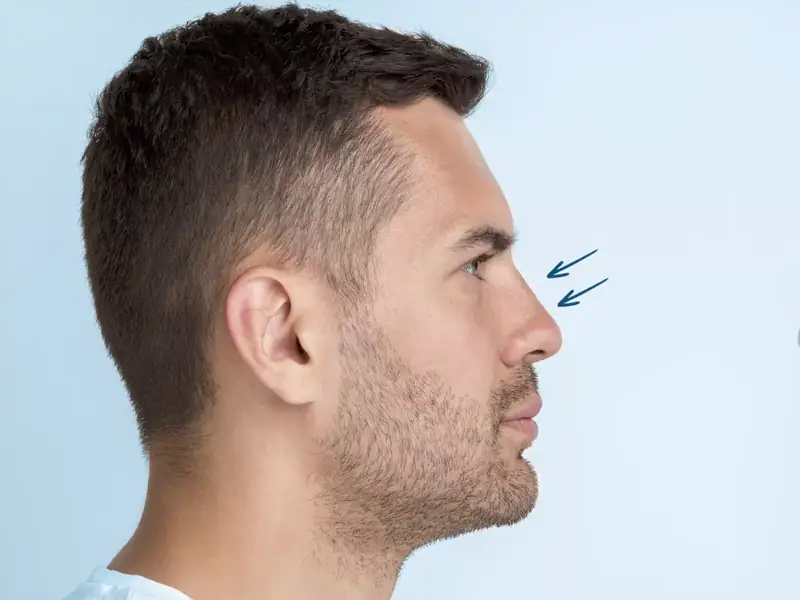
No gallery shows your future result, and no style label overrides the medical assessment. If the proposed outcome depends on making your nose smaller at the expense of support or airflow, discuss the tradeoff before agreeing to surgery.
Real Rhinoplasty Results: Two Patient Cases
Browse the front and side views of two patients from Dr. Akbari’s published rhinoplasty gallery. These photographs document individual cases; they cannot predict your outcome.
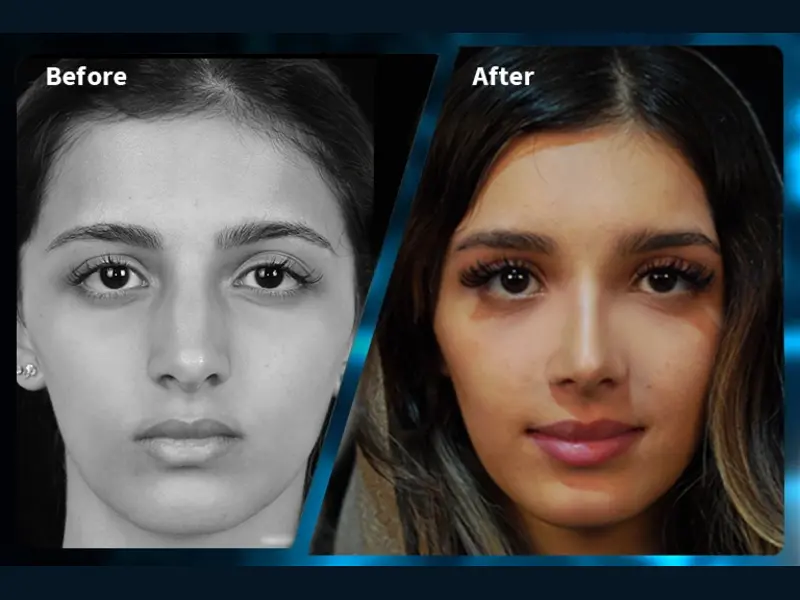
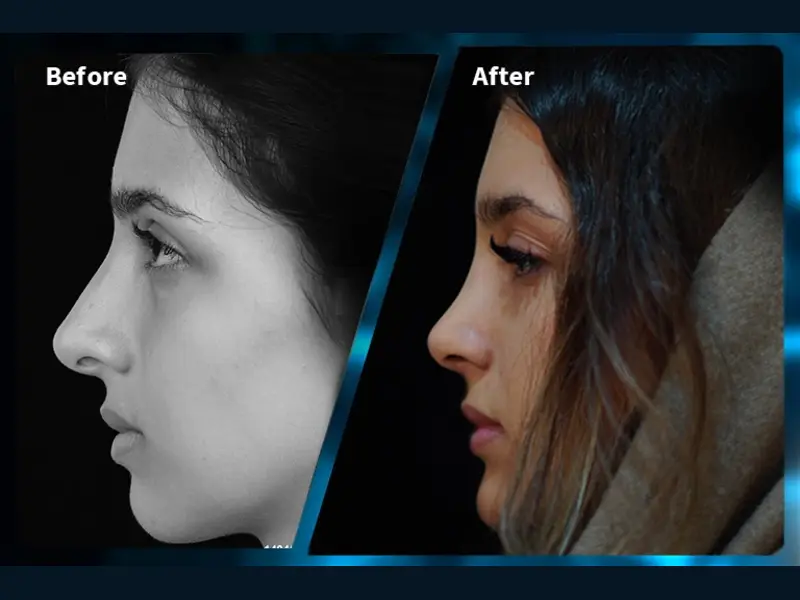
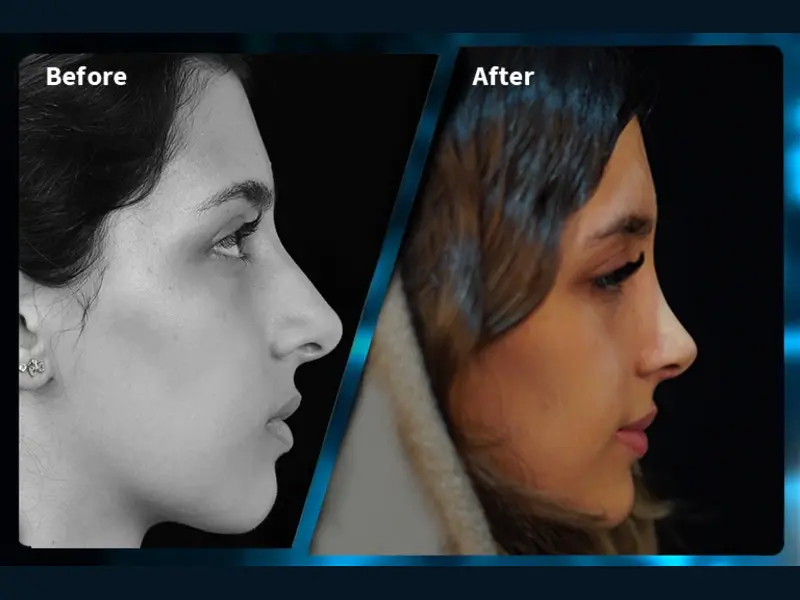
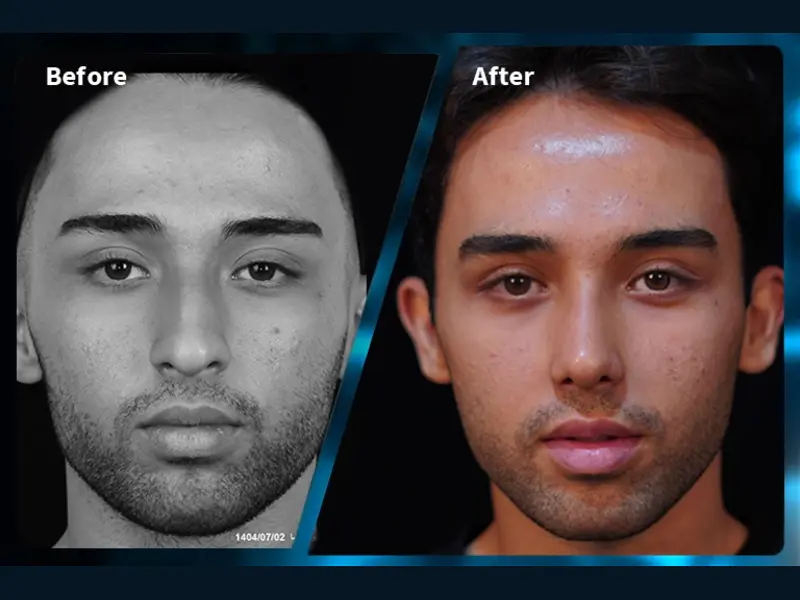
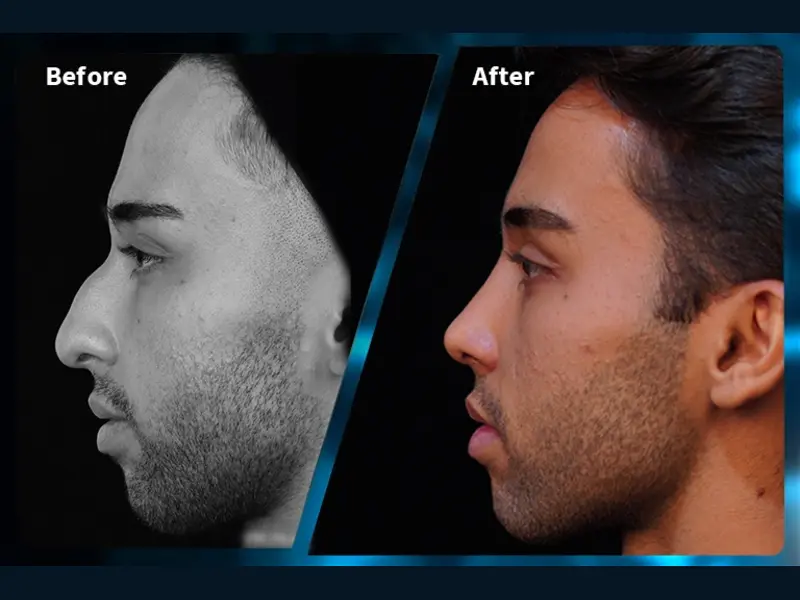
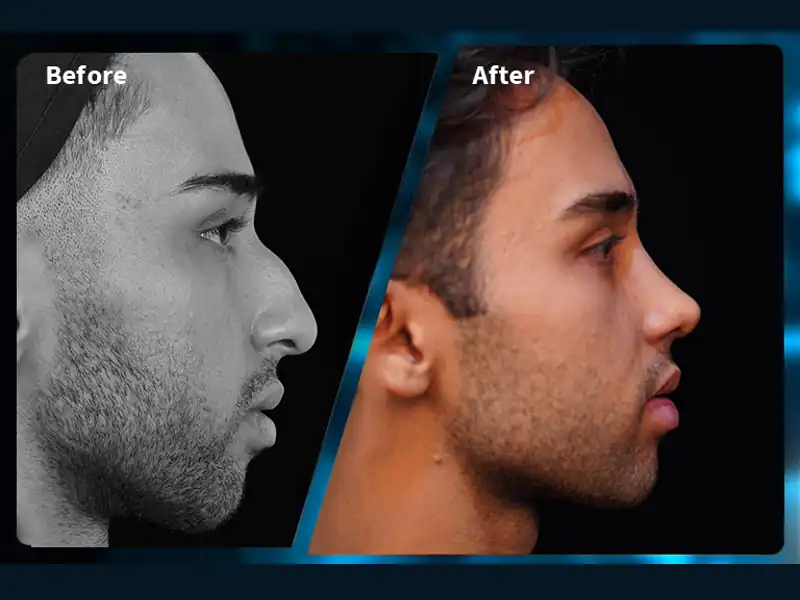
Results vary with anatomy, the surgical plan and healing. Discuss comparable cases during your consultation.
From an overseas inquiry to an in-person plan
For patients coming to Iran, the medical decision should shape the trip. A preliminary exchange can establish whether a consultation is sensible, but final suitability, procedure, facility, anesthesia and stay length need individual confirmation. The following sequence is a planning guide rather than a fixed package itinerary:
- Share your history and goals. Include previous nose surgery, breathing symptoms, medical conditions, medications and photographs from useful angles if the clinic requests them. Use a secure channel agreed with the team.
- Discuss a preliminary plan. Ask what the surgeon expects to assess in person, what is still uncertain and whether a previous operation changes the scope. A remote conversation cannot replace examination.
- Request a written quotation. Confirm which clinical charges, tests, follow-up visits and any hotel or transport services are included. Ask separately about a companion, an extended stay and what happens if surgery is postponed after the in-person assessment.
- Plan recovery before booking a return flight. Allow time for the appointments the surgeon expects you to attend. The actual schedule and fitness to fly depend on your operation, recovery and medical review.
- Arrange follow-up at home. Ask how you will send concerns after returning, which records you will receive and where you should seek urgent in-person care if a complication develops.
On the day of surgery, the team should confirm your history, the agreed procedure and the anesthesia plan. After surgery, you will need discharge instructions you can understand, including how to take prescribed medicines, when to return for review and whom to call about a concern. If someone is traveling with you, discuss their role during the first days of recovery before you leave home. The exact steps depend on the clinic and your medical plan, so do not treat a sample itinerary as a personal appointment schedule.
The detailed international patient package covers coordination, hotel and transfers as options that must be confirmed in a written offer. For the financial side, use the nose job cost in Iran guide to identify fee categories and questions to put to the clinic. Prices and included services vary by case; a broad guide cannot quote your surgery.
Understanding the cost without guessing a price
The final quotation may depend on whether this is a first or repeat operation, the work needed for breathing or structural support, the facility and anesthesia arrangements, and the number of visits or tests included. Travel costs, accommodation and transfers are a separate planning question unless they are explicitly included. Ask for an itemized, dated offer and a clear explanation of what would happen if your in-person assessment changes the surgical plan. This guide does not publish a fixed price because it would be misleading without those details.
Recovery in Iran and after you return home
Recovery has more than one timeline. You may feel ready to talk and walk well before the swelling has settled, and feeling better does not mean your nose is ready for heavy exercise or a flight. Your discharge instructions should take priority over general examples online.
| Stage | What many patients discuss with the team |
|---|---|
| First days | Congestion, some drainage and swelling are common; ask about head elevation, dressings, medicines and when to call urgently. Follow your own written instructions. |
| Around the first week | A splint may be reviewed or removed at a scheduled visit. This depends on the operation and the surgeon’s plan. |
| Following weeks | Bruising and visible swelling usually improve; return to work, exercise and glasses needs individual advice. Protect the nose from knocks. |
| Following months | The contour continues to change as swelling resolves; keep the agreed photo and follow-up schedule, particularly if the tip remains swollen. |
Air travel soon after surgery deserves its own conversation. Surgery and long periods of sitting during travel can add to the risk of blood clots, while congestion and bleeding can make a flight uncomfortable or unsafe for some patients. Published travel guidance gives broad windows, but it is not medical clearance for your case. Do not book a nonrefundable flight solely because a package advertises a particular number of nights; ask when the surgeon will assess your readiness to travel and what happens if that date changes.
Before leaving Iran, check that you know the date of the last planned examination, how to reach the team from abroad and which symptoms require local care rather than waiting for a reply. Keep a copy of your operation summary and medicines. Recovery support should remain possible after you travel; a video call or photograph can help with follow-up, but it cannot replace emergency evaluation if you become unwell.
Contact your treating team promptly for unexpected symptoms, worsening pain, fever, concerning bleeding or breathing difficulty. If you are already home and symptoms seem urgent, seek local emergency care; remote messages cannot replace an in-person assessment.
Choosing a surgeon and checking the evidence
Ask about the surgeon’s relevant training, experience with a nose like yours, the proposed facility, anesthesia arrangements and how complications and follow-up are handled. Discuss what is planned for both appearance and breathing. Review genuine cases with similar starting anatomy and time after surgery; illustrations or simulations are discussion aids, not proof of an actual outcome.
You can read Dr. Armin Akbari’s profile and browse the rhinoplasty results gallery before sending questions. If the scope sounds reasonable for you, contact the team with your country, a contact number including its country code, your goals, any previous surgery and the dates you are considering. Ask for a written, case-specific plan before paying for travel.
Frequently asked questions
The medical principles still depend on anatomy, goals, surgical assessment and safe follow-up. For an international patient, the additional decisions are travel, communication, accommodation, a written breakdown of costs and care after returning home.
It may help when a structural problem is identified and addressed, but not every breathing complaint has the same cause. Describe your symptoms and ask for an airway assessment. The cosmetic and functional parts of a plan should be discussed together.
Skin thickness and framework support limit what may be visible and how quickly swelling settles. Your surgeon can explain a reasonable goal after examination; no nose-type label guarantees a particular shape.
There is no flight date that fits everyone. The surgeon needs to review healing, any bleeding or complications, planned follow-up and the length of the journey before advising whether you can travel. Keep your return booking flexible where possible.
The early shape changes as swelling improves over weeks and months. Refinement may continue for a year or longer. Use your surgeon’s follow-up schedule and compare photographs from equivalent stages rather than judging the result immediately after the splint comes off.
Only a written, individual offer can confirm what is included. Ask for separate details of surgery and facility fees, tests, follow-up, hotel nights, transfers and any costs if your stay has to be extended.
The more useful question is which approach allows the surgeon to make the changes your nose needs while protecting function and support. Ask for the reasons behind the recommendation and what it means for an incision and follow-up.
Medical references
For general medical information, see Mayo Clinic’s rhinoplasty overview, the NHS rhinoplasty recovery guide and the CDC medical travel guidance. They do not replace advice from the surgeon assessing your case.