Reconstructive Cleft Lip Surgery (Cheiloplasty) is a transformative procedure that dramatically improves a patient’s quality of life. However, the final success of this surgery depends not only on the surgeon’s skill but equally on your dedication to post-operative care.
This phase is critical for ensuring minimal scarring, preventing infection, and protecting the delicate sutures. This comprehensive guide, provided by Dr. Armin Akbari, outlines the step-by-step recovery process from hospital discharge to full healing.
Why is Postoperative Care for Cleft Lip Surgery So Important?
Following the doctor’s instructions is vital to prevent wound dehiscence (stitch opening), minimize scarring, and avoid infection. Without proper care, pressure or contamination on the surgical site can prolong recovery and necessitate future revision surgeries.
Strict adherence to these guidelines ensures a shorter, complication-free recovery period and protects the delicate reconstruction of the lip muscles.
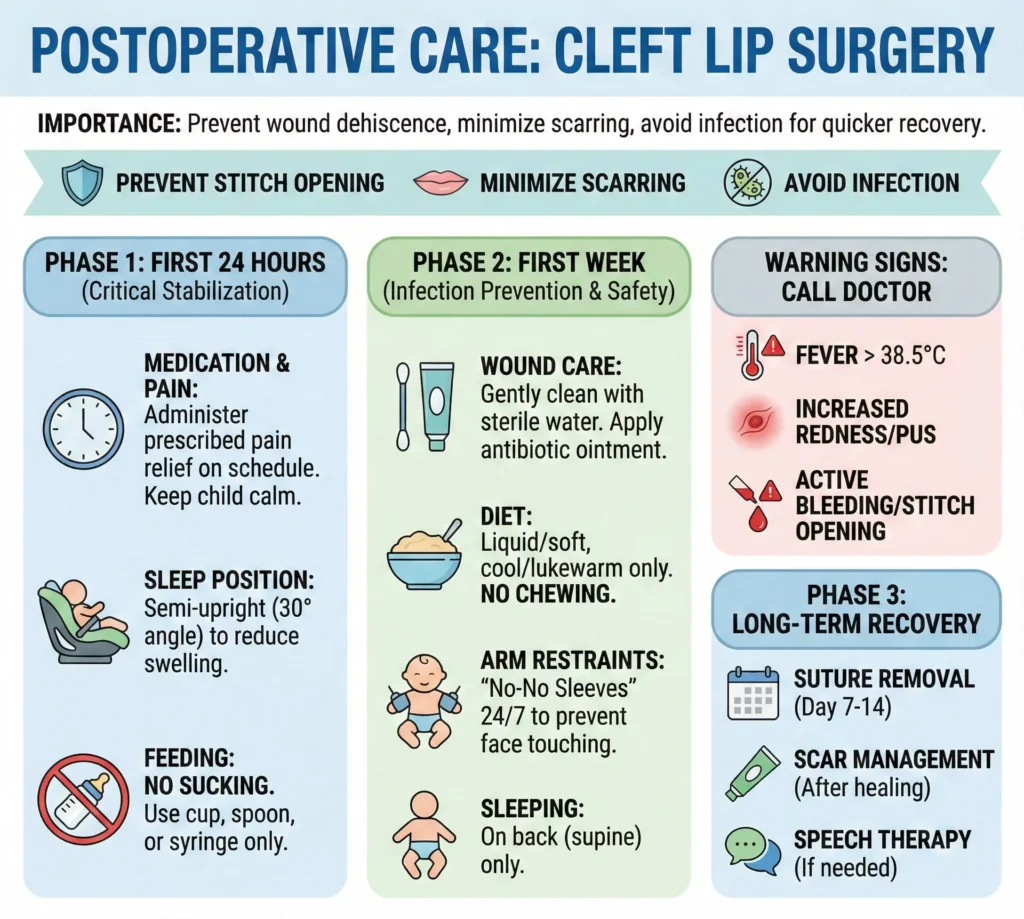
Phase 1: The First 24 Hours (Critical Stabilization)
The first day after surgery is crucial for stabilizing the patient (usually an infant) and starting the healing process.
۱. Discharge & Medication
Before leaving the hospital, ensure you fully understand the medication schedule (antibiotics and pain relief) and emergency instructions. Dr. Akbari’s team will teach you how to care for the suture line.
۲. Pain & Fever Management
Keeping the child calm is essential, as excessive crying puts pressure on the stitches.
- Pain Relief: Administer prescribed painkillers (usually Acetaminophen) exactly on schedule. Do not wait for the child to start crying from pain.
- Fever: A mild rise in temperature is normal after anesthesia, but a high fever can be a sign of infection and requires immediate attention.
۳. Sleeping Position (30-Degree Angle)
The patient must rest in a semi-upright position (elevated about 30 degrees). This helps reduce facial swelling and prevents fluid accumulation.
- For Infants: Use pillows or a car seat to keep the head elevated.
۴. Feeding Rules: NO SUCKING
The Golden Rule: Any sucking motion can pull the stitches apart.
- Method: Use a cup, spoon, syringe, or a specialized dropper.
- Avoid: Do NOT use bottles with nipples, pacifiers, or sippy cups that require sucking power.
Phase 2: The First Week (Infection Prevention)
The first 7 to 10 days are the “Danger Zone” where the risk of infection or suture damage is highest.
۱. Wound Care & Cleaning
The goal is to keep the suture line clean and free of crusts (scabs).
- Cleaning: Gently clean the area using sterile water or diluted saline solution. Use a clean cotton swab (Q-tip) with a rolling motion. Do not rub. This must be done after every feeding to remove food particles.
- Antibiotic Ointment: Apply the prescribed ointment 3 to 5 times a day. Keeping the wound moist prevents hard scabs from forming, which results in better scarring.
۲. Diet & Feeding
- Texture: Strictly liquid, cold, or lukewarm diet. Clear soups, diluted fruit purees, and soft yogurt are allowed.
- Avoid: No hot foods, no hard/crunchy foods, and absolutely no chewing.
۳. Swelling Management
- Cold Compress: In the first 48 hours, you can use a cold compress on the cheeks (not directly on the lip stitches) to reduce swelling. Mild swelling is a normal side effect.
Related Article: Best Cleft Lip & Palate Surgeon in Iran
Physical Restrictions & Safety Measures
The newly repaired lip is extremely vulnerable to tension and rubbing.
۱. Arm Restraints (No-No Sleeves)
For infants and toddlers, Arm Restraints are non-negotiable. These stiff sleeves prevent the child from bending their elbows and touching their face. They must be worn 24/7 for ۱۰ to 14 days.
۲. Sleeping Position
The patient must sleep on their back (supine position). Sleeping on the stomach or side can cause the face to rub against the mattress, damaging the skin.
۳. Limit Facial Movement
Try to minimize activities that stretch the face, such as excessive crying, wide laughing, or opening the mouth too wide.
- Tip for Parents: Keep the child entertained and comforted to prevent prolonged crying fits.
Warning Signs after Cleft Lip Surgery: When to Call the Doctor?
You must be able to distinguish between normal healing and signs of complications. Contact your doctor immediately if you notice:
Signs of Infection:
- Fever above ۳۸.5°C (101.3°F) not controlled by medication.
- Increasing redness, heat, or spreading inflammation around the stitches.
- Purulent discharge (yellow/green pus) or foul odor from the wound.
Emergencies:
- Active, uncontrollable bleeding.
- Dehiscence: If the stitches open or the wound gaps.
- Dehydration: If the infant refuses to drink liquids.
Phase 3: Long-Term Recovery & Scar Management
Recovery doesn’t end when the stitches come out.
۱. Suture Removal
Stitches are typically removed or dissolve on their own between Day 7 and Day 14, depending on the material used.
۲. Scar Management (The 1-Year Journey)
Once the wound is fully closed (usually after 2 weeks), Dr. Akbari may prescribe:
- Silicone Gel/Sheets: To flatten and fade the scar.
- Massage: Gentle massage techniques to soften the scar tissue.
- Note: Never start scar massage until the surgeon confirms the wound is completely healed.
۳. Speech Therapy
For patients with Cleft Palate involvement, regular follow-up with a speech therapist is essential to ensure proper articulation and prevent “nasal” speech.
Summary & Final Thoughts
Precise adherence to these instructions is the key to a beautiful smile and functional recovery. By preventing infection and protecting the sutures, you safeguard the investment you made in this surgery.
Dr. Armin Akbari, with his extensive experience in reconstructive surgery in Iran, is dedicated to supporting you through every step of this journey.
Contact & Appointments
To schedule your follow-up or consultation, Dr. Armin Akbari’s clinics in Tehran and Qazvin are ready to welcome international patients.
- Tehran Clinic: +۹۸ ۹۱۹ ۳۸۵ ۲۲ ۹۰
- Qazvin Clinic: +۹۸ ۹۳۶ ۷۸۷ ۱۴ ۱۲
- Online Consultation: Available via WhatsApp/Website.
Frequently Asked Questions (FAQ)
The initial healing takes 7 to 14 days (until stitches are removed). However, the internal tissues and the scar continue to mature and fade for up to one year.
No. Pacifiers, bottle nipples, and sippy cups are strictly forbidden for at least 10-14 days as the sucking motion creates tension on the wound.
You can usually start using silicone gels or creams after the stitches are removed and the scab has fallen off completely (usually around week 3), only with the doctor’s approval.