Undergoing nasal surgery is a deeply personal decision. Waking up from surgery or going through the healing process only to see an overly upturned nasal tip can be highly distressing.
This specific outcome, informally known as a “piggy nose,” happens when the nasal tip is rotated too far upward, over-exposing the nostrils and creating an unnatural angle between the nose and the upper lip. If you are experiencing this, please know that you are not alone, and highly effective medical solutions are available to help you regain your confidence.
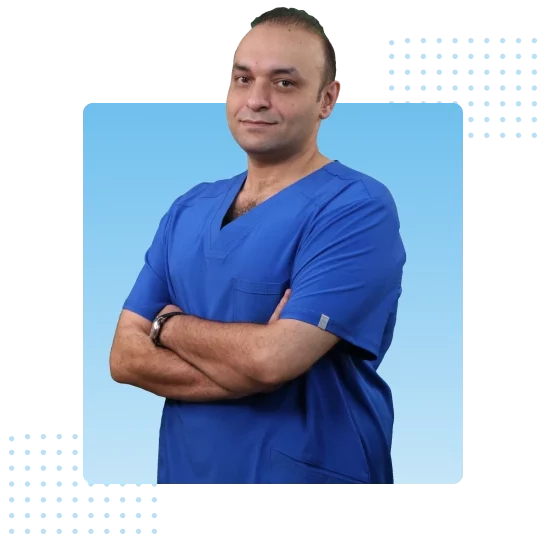
Dr. Armin Akbari
Board-Certified ENT and Rhinoplasty Surgeon | Tehran, Iran
Specializing in complex revision rhinoplasty, Dr. Akbari is dedicated to resolving aesthetic concerns and restoring flawless nasal function with precision and care.
Call for ConsultationThis comprehensive guide will explore the exact causes of an overly rotated nasal tip, how to distinguish between temporary swelling and permanent structural changes, and the various surgical and non-surgical correction avenues.
What Exactly is a Piggy Nose After Rhinoplasty?
To understand this condition, we first need to look at how cosmetic surgeons measure facial balance. A “piggy nose” is medically defined as an over-rotated nasal tip.
During a standard primary rhinoplasty, the surgeon often needs to lift the tip of the nose slightly to prevent it from drooping as gravity and healing take effect over time. A balanced configuration features a gentle angle between the upper lip and the base of the nose (the nasolabial angle):
- For men: Typically ranges from 90 to 95 degrees.
- For women: Generally ranges from 95 to 105 degrees.
If this angle exceeds natural parameters, the nose appears disproportionate. Recognizing the signs early involves observing a few key characteristics:
- A shortened nasal bridge that lacks forward projection.
- Excessive nostril visibility when looking straight into a mirror.
- A noticeable imbalance between the tip and the upper third of the nose.
- Potential new disturbances in breathing, stemming from altered nostril size.
Early Healing vs. Permanent Shape: The Importance of Patience
After undergoing any facial cosmetic procedure, allowing your body the necessary time to heal is paramount. The recovery process spans several months, and residual swelling will heavily distort your true surgical outcome.
For more information, read our article about “How Much Does the Nose Change After Rhinoplasty?”
The Initial Recovery Phase
It is incredibly common for the nose to look overly upturned immediately after the cast is removed. The tape and splints hold the nose in an elevated position, and surgical trauma causes significant tissue swelling. As you progress through the first few months:
- The swelling gradually subsides.
- The skin begins to relax.
- The tip of the nose will almost always drop into a more natural position.
Why the 12-Month Mark Matters
Drawing premature conclusions during the first few weeks can cause intense stress. The body heals at its own pace. Most specialists strongly recommend waiting a full 12 months before making final judgments about the shape of your nose or considering a secondary operation. This waiting period allows the cartilage to settle completely, revealing the true underlying structure.
Why Does an Upturned Nose Happen? Identifying the Causes
If a full year has passed and the excessive rotation remains, structural issues are likely at play. The reasons behind an over-rotated nose are multifaceted:
1. Over-Resection of Cartilage
One of the most frequent causes is the removal of too much cartilage from the nasal tip or the septum. The cartilage acts as foundational support. If a surgeon removes an excessive amount, the tip loses its anchor and rotates excessively upward.
2. Surgical Technique and Planning
Achieving the perfect nasal contour requires an exact understanding of geometric facial proportions. If the original technique failed to account for your specific facial measurements, the resulting rotation might be too aggressive, permanently locking the tip into an upturned position.
3. Scar Tissue and Contracture
The human body responds to surgery by creating scar tissue. As internal incisions heal, scar tissue forms and naturally contracts (shrinks). In some patients, this contracture is unusually strong and physically pulls the nasal tip upward over several months.
4. Underlying Anatomical Factors
A patient’s natural anatomy plays a massive role in the final result. Individuals with naturally short nasal bones, thin nasal skin, or a prominent upper lip might reveal excess rotation much more prominently.

The Functional Impact: Breathing with an Over-Rotated Tip
Cosmetic concerns are only half of the conversation. Because the nose is a vital respiratory organ, altering its external shape directly affects its internal function.
Common Breathing Complications
An overly upturned nasal tip can obstruct the nasal valve, the narrow area responsible for regulating airflow. When the tip is pulled too high, you might experience:
- Pinched nostrils and internal nasal passages.
- New breathing difficulties or feelings of obstruction.
- Chronic congestion.
- A whistling sound when inhaling.
This highlights why consulting with an ENT specialist like Dr. Armin Akbari is beneficial. Corrective procedures must prioritize opening the airways just as much as refining the aesthetic appearance.
Correcting an Upturned Nose: Your Surgical and Non-Surgical Options
If you are dealing with persistent dissatisfaction regarding your nasal shape, several avenues exist to restore balance to your face.
Non-Surgical Solutions for Mild Cases
For individuals hesitant about undergoing another invasive procedure, non-surgical techniques offer an effective alternative for mild to moderate cases.
Using carefully placed dermal fillers, a specialist can add precise volume to specific areas of the nose. By injecting filler into the bridge or the tip, the surgeon can create the illusion of a longer, more downward-pointing nose.
- Benefits: Immediate results, no surgical downtime, and a chance to “test-drive” a new nasal shape.
- Limitations: Dermal fillers are temporary (lasting 9 to 18 months) and cannot fix underlying structural or breathing issues.
Revision Rhinoplasty: The Surgical Correction
For pronounced upturns, or in cases where breathing function is compromised, revision rhinoplasty (a secondary surgery) is the necessary path forward.
Correcting a piggy nose by the usually involves lengthening the nose and bringing the tip down to a natural angle. Because the primary surgery likely removed too much cartilage, the revision surgeon must rebuild that lost support through cartilage grafting:
- Dr. Akbari typically harvests a small amount of healthy cartilage from your nasal septum, ear, or occasionally your rib.
- This cartilage is meticulously sculpted and placed into the nasal tip.
- The grafts act as structural pillars, extending the nose’s length and preventing future scar tissue from pulling the nose back up.
The Revision Process of the Piggy Nose: Setting Realistic Expectations
Preparation and clear communication are vital for a successful secondary surgery. Revision surgeries are inherently more complicated than primary surgeries due to the presence of scar tissue and altered anatomy.
Comprehensive Nasal Evaluation
During your consultation in Tehran, Dr. Akbari will conduct an in-depth assessment. He will evaluate your skin condition, the internal airways, and the amount of available cartilage needed for grafting.
Defining Success in Revision Surgery
It is crucial to have transparent conversations about your aesthetic goals and your previous surgical history. Perfection is rarely the goal in revision surgery; instead, the focus is on achieving significant improvement, restoring facial harmony, and ensuring you can breathe comfortably.
Post-Surgery Care and Long-Term Maintenance
The recovery period following a revision procedure of piggy nose requires careful attention to your surgeon’s guidelines. Proper aftercare significantly minimizes the risk of complications.
- Elevate Your Head: Keep your head elevated, especially during sleep, for the first few weeks to drastically cut down on persistent swelling.
- Gentle Cleaning: Keep the nasal skin clean and moisturized according to the prescribed regimen to prevent infection.
- Avoid Physical Trauma: Protect your nose from any potential impact. Avoid heavy lifting, contact sports, and wearing heavy eyeglasses that rest on the healing bridge.
- Attend Follow-Ups: Routine visits allow your surgeon to monitor your healing progress and address any minor concerns early on.
Common Misconceptions About Post-Rhinoplasty Healing
Misinformation surrounding cosmetic procedures often causes unnecessary anxiety. Let us clarify some frequent myths regarding over-rotated nasal tips:
- Myth: An upturned tip immediately after surgery is permanent.
- Fact: The vast majority of immediate post-operative rotation is due to swelling and surgical taping. The tip will almost always drop significantly over the first few months.
- Myth: Dermal fillers can permanently replace revision surgery.
- Fact: Injectable fillers are an excellent tool for temporary camouflage, but they cannot fix structural deficiencies or resolve breathing issues.
- Myth: A piggy nose only happens if the surgeon made a mistake.
- Fact: Even with elite surgeons, unpredictable healing variations, aggressive scar contracture, and unique anatomical factors can pull a nose upward.
Choosing the Right Expert for Piggy Nose Surgery
Correcting a piggy nose requires a surgeon with vast experience, technical precision, and a profound understanding of the interconnected nature of the face and respiratory system.
As a dedicated ENT specialist in Tehran, Dr. Armin Akbari brings a unique, dual-focused approach to revision rhinoplasty. His approach ensures:
- A beautiful, natural-looking contour that matches your specific facial proportions.
- Restored structural integrity of the nasal valves.
- Preservation of flawless breathing function.
By analyzing your unique facial features, previous surgical history, and specific anatomical needs, Dr. Akbari designs tailored corrective strategies to reverse the distress of a previous procedure.
Moving Forward with Confidence
Experiencing an unexpected outcome after nasal surgery can feel overwhelming, but a piggy nose is a correctable condition. Through patient healing, careful evaluation, and the right intervention, you can achieve the balanced, natural appearance you originally desired.
Education is your most powerful tool in this journey. By understanding your options and setting realistic expectations, you take back control.
For professional guidance, structural evaluation, and a personalized correction plan, contact the office of Dr. Armin Akbari in Tehran, Iran. Take the first step toward restoring your facial harmony and reclaiming your confidence today.
Frequently Asked Questions (FAQ)
The exaggerated upturn is usually most noticeable right after the cast is removed. For the majority of patients, as the swelling subsides and the tissues relax, the nasal tip will naturally drop and settle into its final position over the first 3 to 6 months.
You should never apply pressure, aggressively massage, or tape your nose in an attempt to pull the tip downward unless explicitly instructed by your surgeon. Doing so can disrupt the delicate healing grafts and severely worsen your surgical outcome.
Surgeons generally require patients to wait a minimum of 12 months after their primary surgery. This mandatory waiting period ensures all residual swelling has resolved and the internal scar tissue has softened, making a secondary procedure safer and the results more predictable.
While fillers technically add volume, a highly skilled facial plastic surgeon uses them strategically to create visual balance. By filling specific hollows or slightly extending the bridge, the nose often appears more proportionate and harmonious with your face, rather than noticeably “bigger.”